

The old playbook stopped working
For years employers were told the same thing. Offer a solid medical plan. Add a menu of voluntary extras like accident, critical illness and hospital indemnity. Job done.
In a high-deductible world, that playbook no longer works.

Across the country, employees are technically insured and functionally unable to afford care.
Deductibles and out-of-pocket maximums have climbed far faster than wages. Many families do not have the savings to absorb even one unplanned bill.
Your people are already telling you what they need
There is one number here that should stop you.
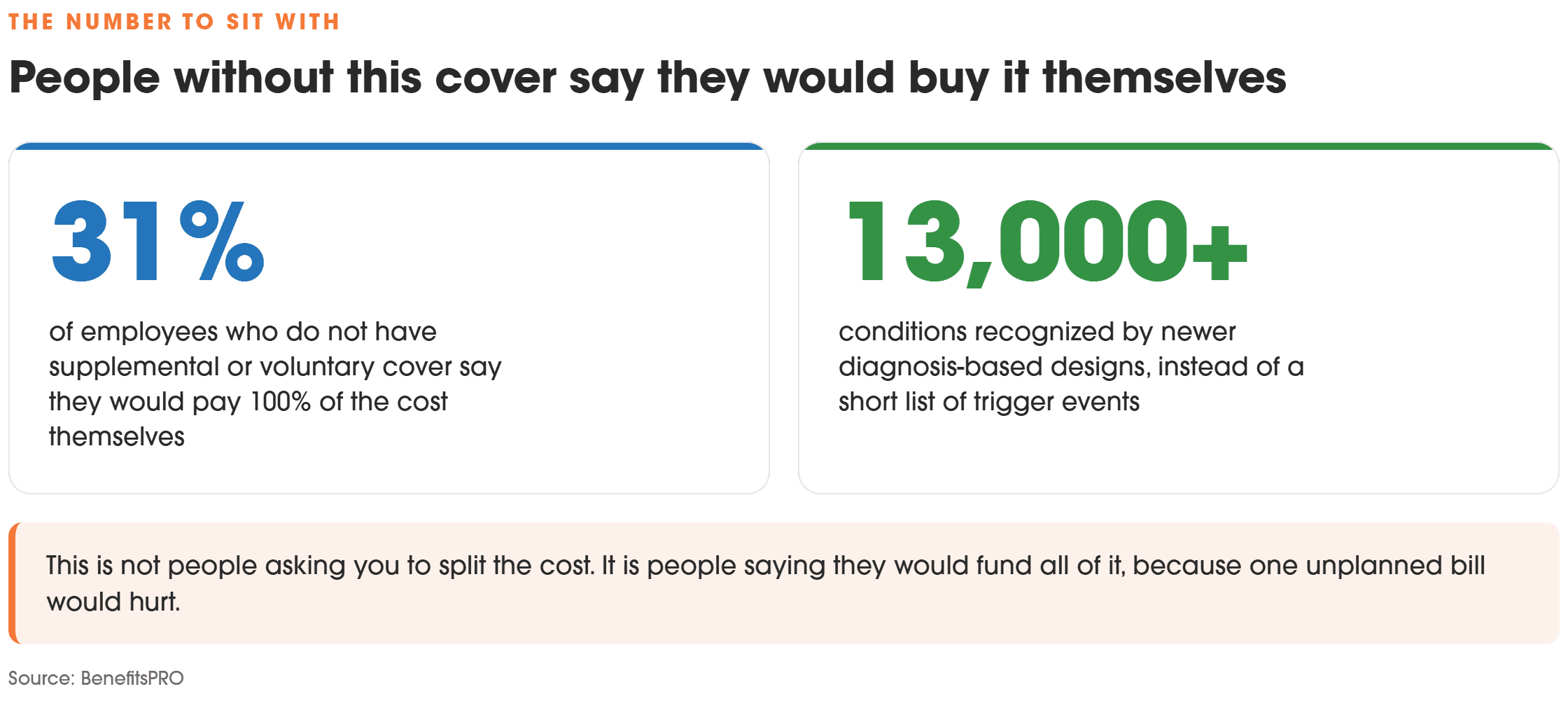
Read that condition carefully, because it is the whole point. These are people who do not have the cover today. They are not asking you to split the cost with them. They are saying they would fund all of it, out of their own pocket.
That is not a preference. That is unmet demand, and it is what worry about affording care looks like in a survey answer.
Why the old products kept missing
Traditional supplemental products were built around narrow trigger events. One specific accident. A short list of critical illnesses. A hospital stay.
So plenty of employees never saw a payment, even while facing very real and very expensive health problems. How often these plans got used, and how much they paid out, reflected that mismatch for years.
Meanwhile the real cost driver for families had moved somewhere else entirely.
The bills that actually hurt a household
It is rarely the rare catastrophe. It is the urgent care visit for a child. It is the minor episode that is over in an afternoon. The bill still runs to thousands of dollars. All of it before the deductible is met.
For someone living paycheck to paycheck, that is the moment that decides whether they get care or delay it.
That is a decision about money, made in the middle of a health problem.
What changed in the products
Newer designs have started to catch up.
Instead of hanging on a short list of catastrophic events, they cover a far wider range of conditions. More than 13,000 of them, across different levels of severity. They follow how care is actually coded and billed today.
That breadth is the entire idea. It matches the full range of situations that create financial strain, not just the rare edge cases.
Three shifts define where this is heading.
1. From rare events to everyday reality
Cover is built around the diagnoses and visits that actually generate bills for families. Not a handful of worst-case scenarios.
2. From almost nobody claiming to people getting paid
These plans are structured so a far larger share of covered employees receive a payment when they need one. In some models, several times more claims than traditional accident and critical illness plans combined.
3. From paperwork to predictability
Claims tie to standard diagnosis codes. They can be triggered automatically from medical claims feeds. So your employee is not filling in confusing forms in the middle of a crisis.
These are not extras anymore
Put those three together and the job of this category has changed.
These are financial safety nets that wrap around a high-deductible plan. Their purpose is to make it realistic for your people to use the coverage you are already paying for.
That last line is worth reading twice. You are already buying the medical plan. If your team cannot afford to walk through the door, you are paying for coverage that does not get used.
Some in the industry now ask whether the category needs a different name altogether. Financial Health Protection, rather than supplemental. The name matters less than the shift behind it.
Where to start
Four questions about your own plan.
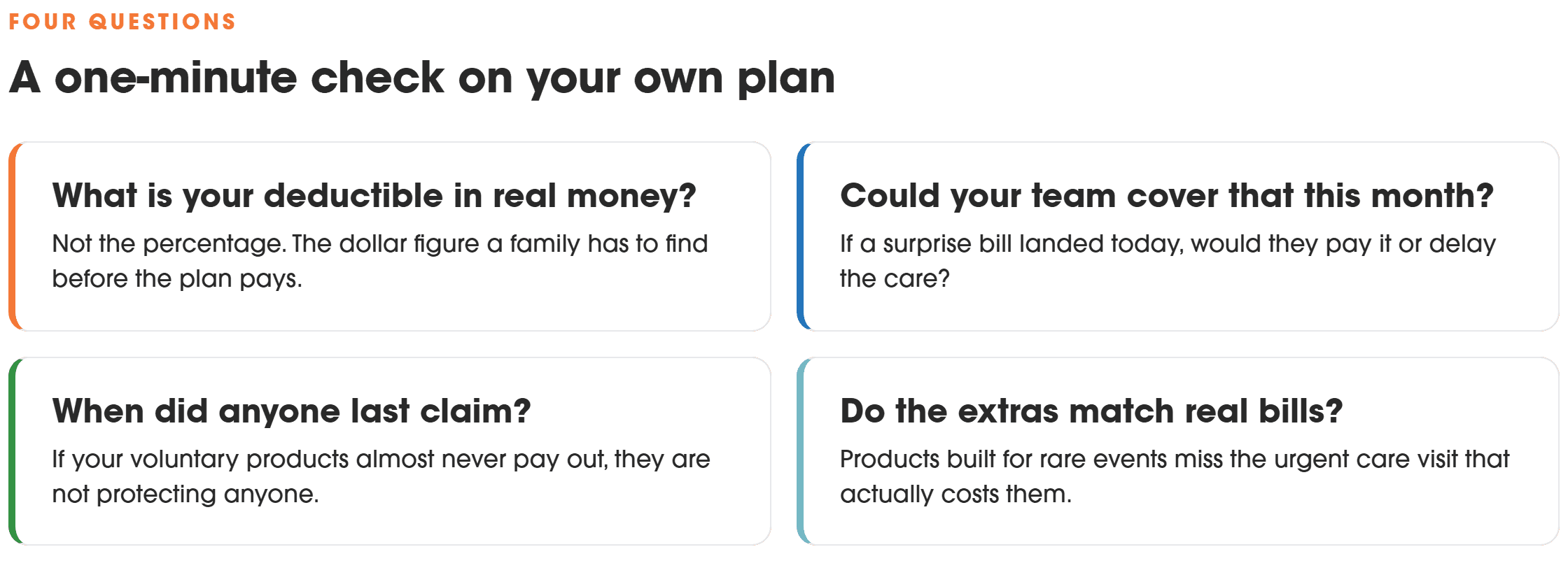
If you paused on two of them, that is worth twenty minutes of your time.
Source: BenefitsPRO, "Why supplemental health isn't 'supplemental' anymore."


